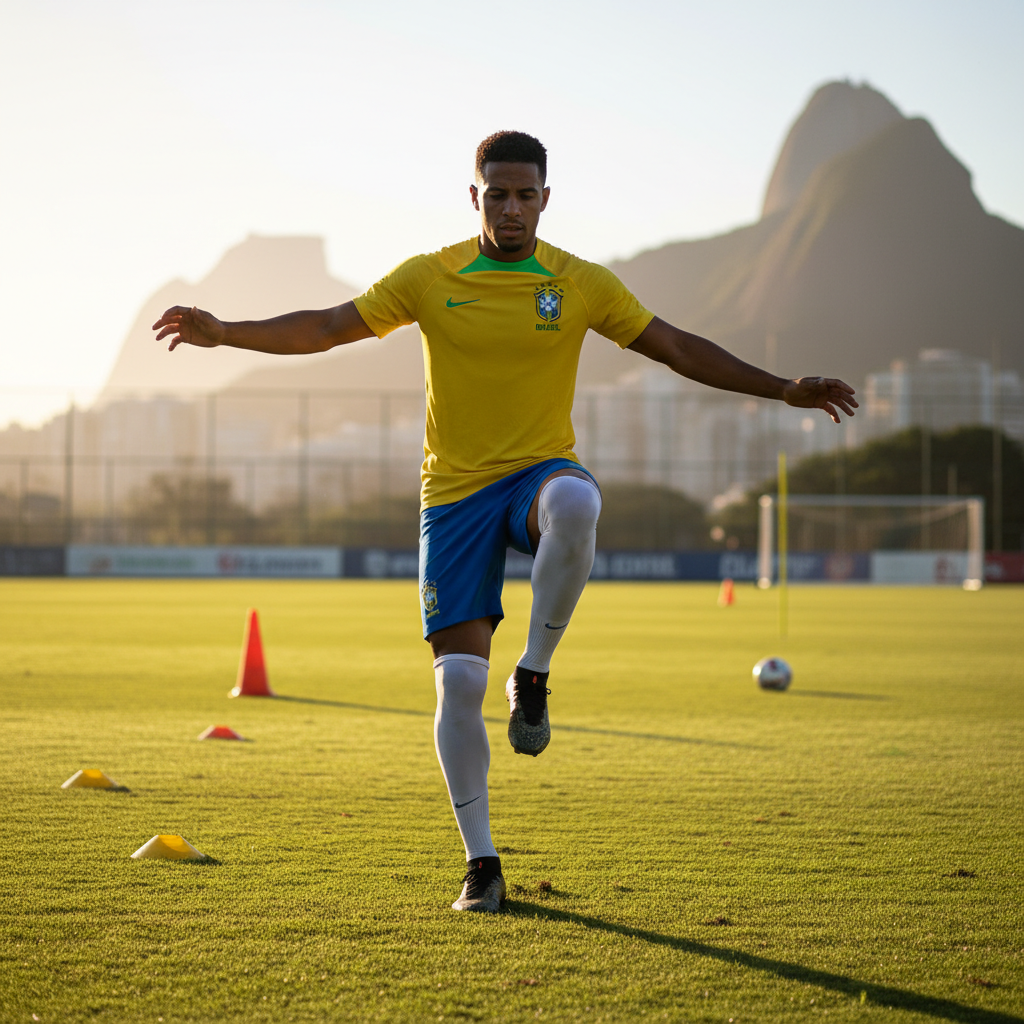
You love the game, but every sprint, every cut, every landing leaves you wondering if your knees will hold up. For amateur soccer players carrying extra body weight, that worry is not unfounded. The forces passing through your knee joint during a simple direction change can reach four to six times your body weight, and even modest increases on the scale translate directly into measurable stress on your ACL, meniscus, and cartilage. Understanding this relationship is not about shame or restriction; it is about giving you the clearest possible picture of your risk and the most practical tools to stay on the field. In this article, you will learn the biomechanics behind knee loading, how physiotherapy assessment identifies danger early, and which training and lifestyle strategies genuinely reduce injury risk for players at every fitness level.
Why Knee Injuries Are So Common in Amateur Soccer
Every Sunday across Rio de Janeiro, thousands of amateur players lace up their boots for a pelada or weekend league match, often stepping onto the field without any structured preparation. Unlike professional athletes who train daily under medical supervision, most recreational players train inconsistently, carry higher body fat percentages, and have never once been screened for injury risk before competing.
This combination creates a real problem for the knees. Knee injuries account for roughly 20-30% of all soccer injuries, making the joint one of the most vulnerable on the field. The three types that show up most often in amateur players are ACL tears, meniscus damage, and patellofemoral pain syndrome. Each of these can sideline a player for weeks, months, or longer, and each is directly influenced by how much load the joint is absorbing during play.
The gap between professional and recreational players is wider than most people realize. A professional has conditioning coaches, regular physiotherapy assessments, and structured load management built into their week. The amateur body weight knee injury amateur soccer player context is fundamentally different: the player jumps into a 90-minute match with none of that preparation behind them, and the knees absorb the consequences.
The Physics of Knee Load: What Happens Inside Your Joint When You Run and Cut
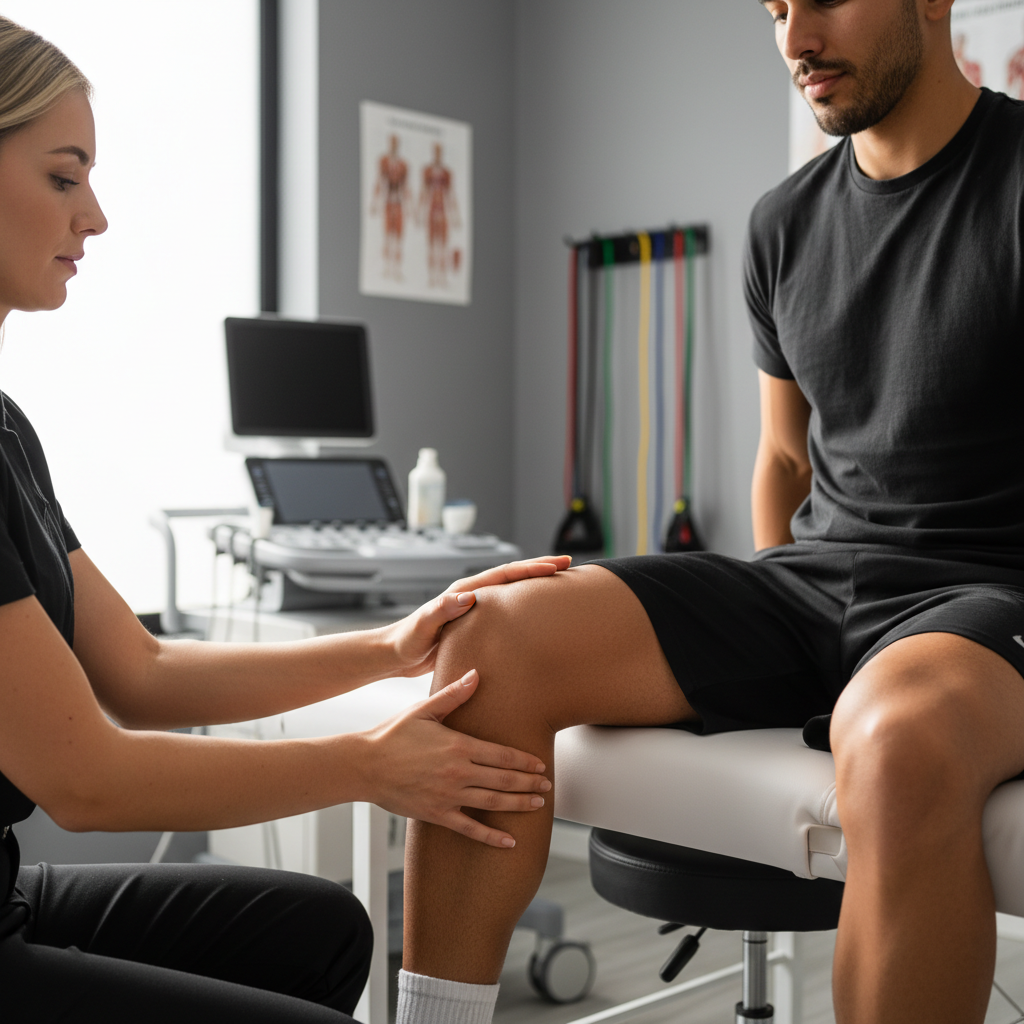
Understanding why the knee is so vulnerable starts with one simple fact: your knee joint does not just support your body weight. It multiplies it.
During a casual walk, the knee absorbs approximately 2 to 3 times your body weight on every step. Jogging pushes that to 4 to 5 times. When you make an explosive lateral cut, decelerate suddenly to change direction, or land from a header challenge, forces at the knee can reach 6 to 8 times your body weight. That is not a metaphor. That is the mechanical reality inside the joint on every single relevant soccer movement.
Now apply that to a 90-minute match. A recreational player covers between 7 and 10 kilometers per game, executing hundreds of directional changes, sprints, and landings. For a player weighing 75kg, a lateral cut generates roughly 450 to 600kg of force through the knee. For a player weighing 90kg, that same movement generates 540 to 720kg. The difference compounds across every repetition of every movement for the entire match.
A 2024 study published in Scientific Reports (PMC11178890) used subject-specific biomechanical modeling to confirm that excess body weight does not simply add load linearly. It increases muscle activation demands, elevates ligament stress, and raises cartilage contact pressure in ways that accelerate joint wear. For the body weight knee injury amateur soccer player who plays recreationally without structured conditioning, these forces accumulate week after week with no managed recovery in between.
How Excess Body Weight Specifically Raises ACL and Cartilage Injury Risk
Those force multipliers translate into three distinct injury mechanisms that go well beyond the generic warning about osteoarthritis risk.
The first is peak ACL loading during deceleration and lateral cuts. The ACL's primary job is to resist anterior tibial shear and rotational stress, both of which spike during the sudden direction changes that define soccer. At 6 to 8 times body weight, even a single poorly executed cut puts the ligament close to its tolerance threshold. For a heavier amateur player doing this repeatedly across 90 minutes with no structured warm-up, the cumulative stress is not theoretical.
The second mechanism is biomechanical compensation. Under high load, heavier players frequently adopt a wider base of support and allow the knee to collapse inward, a pattern known as valgus collapse. This shifts stress laterally across the joint and increases rotational torque on both the ACL and the medial meniscus simultaneously. It is not a technique failure so much as the body's automatic response to managing load it has not been conditioned to control.
The third mechanism is metabolic. Excess adipose tissue actively releases inflammatory cytokines, including interleukin-6 and TNF-alpha, that degrade articular cartilage over time. This means cartilage damage can accumulate in the body weight knee injury amateur soccer player context without any single acute trauma event, quietly, between Sunday matches.
Research consistently shows that obesity raises knee osteoarthritis risk by approximately 3 times, and that a 5% reduction in body weight produces clinically measurable reductions in joint loading and inflammation. For the player who assumes nothing is wrong because nothing has snapped yet, that evidence is worth taking seriously.
Physiotherapy Assessment: How We Identify High-Risk Players at F10 Fisio
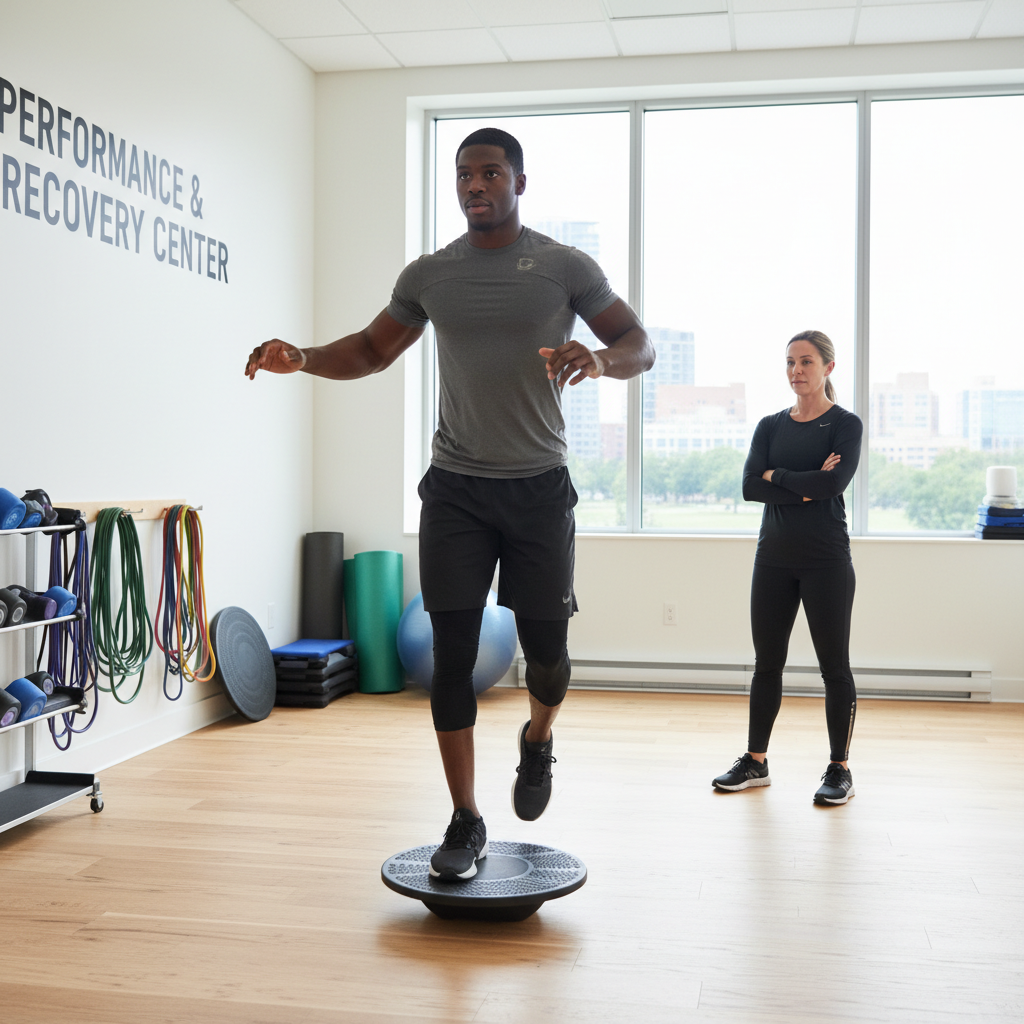
Knowing that excess load damages the knee is only half the picture. The more important clinical question is which players are most at risk, and that answer cannot come from a scale.
At F10 Fisio, our assessment process for the body weight knee injury amateur soccer player begins with movement screening before we discuss numbers. The single-leg squat is one of the most revealing tests available: a player asked to lower slowly on one leg will often show the knee diving inward, the pelvis dropping to one side, or the trunk lurching forward to compensate. Each of these patterns points to specific weaknesses, typically in the glutes, hip abductors, or deep stabilizers, that make the knee vulnerable during lateral cuts regardless of body weight.
Gait analysis and a dedicated valgus collapse test under progressive load complete the movement picture. From there, we assess knee strength ratios directly. A healthy quadriceps-to-hamstring strength ratio sits at roughly 0.6 or above; players who fall significantly below that threshold lack the posterior chain capacity to decelerate safely, which is precisely when ACL injuries occur.
Body composition informs the full clinical context, but it does not determine risk alone. A 90kg player with strong glutes, adequate hamstring strength, and clean landing mechanics may carry meaningfully less knee injury risk than an 80kg player with poor hip control and a pronounced valgus pattern under load. BMI tells us nothing about neuromuscular readiness.
This type of structured assessment is available through our physiotherapy conditioning programs for soccer players. If you want to understand your specific risk profile before your next match, contact our team at F10 Fisio.
Knee Strengthening Exercises for Heavy Soccer Players: What the Evidence Recommends
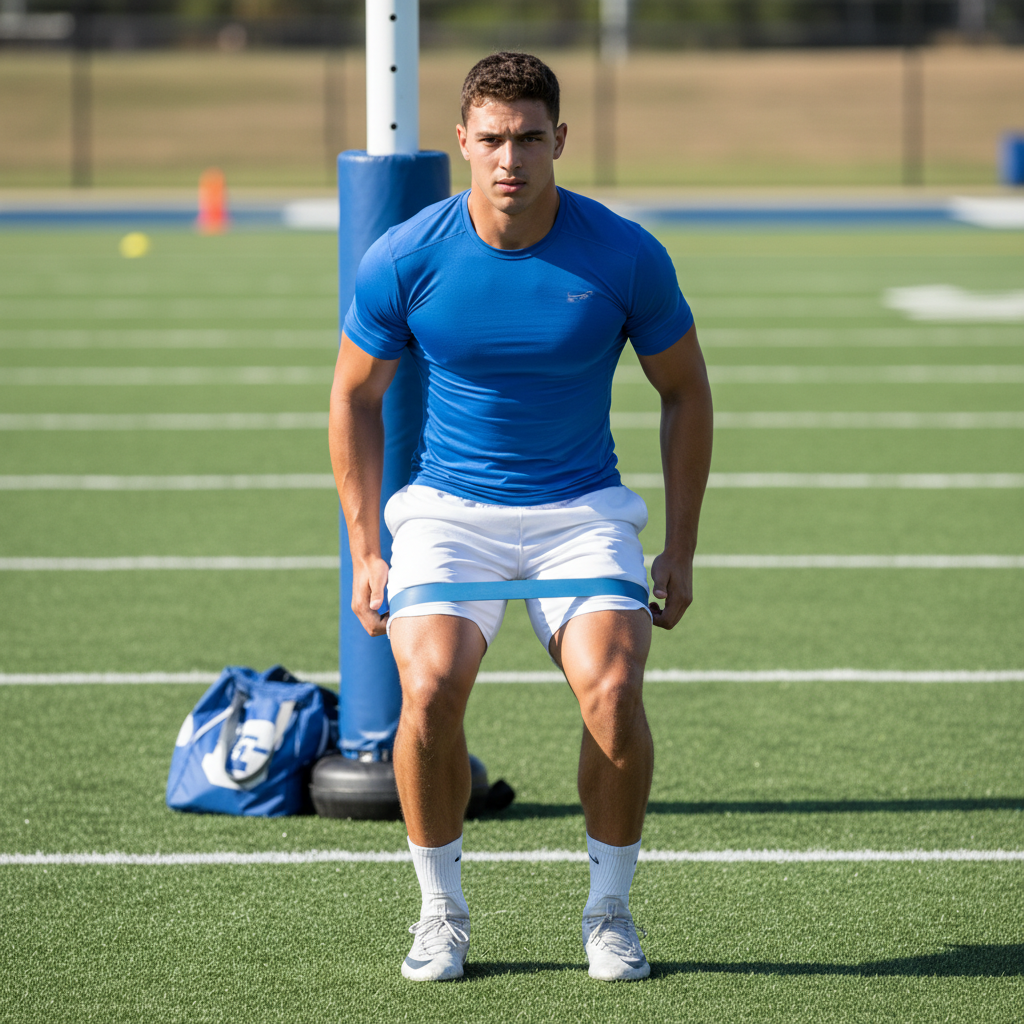
Once you understand your risk profile, the next step is building the protective strength that makes a meaningful difference on the field. For the body weight knee injury amateur soccer player, the exercise selection has to be deliberate. Generic gym programs designed for general fitness do not address the specific demands of soccer movement under elevated load.
For heavier players, one principle applies before anything else: master bodyweight progressions before adding external resistance. The goal is movement quality under real load, and for a 90kg player, bodyweight alone provides substantial stimulus.
Nordic hamstring curls. Kneel on a padded surface with your feet anchored. Lower your torso toward the floor under control, resisting the fall as long as possible. This is the single best-evidenced exercise for ACL protection in soccer: the FIFA 11+ warm-up protocol, which centers on Nordics, reduced knee injuries in amateur players by 30 to 50% in controlled trials. Heavier players generate greater deceleration forces, which is exactly where the ACL is most vulnerable, making hamstring eccentric strength non-negotiable.
Single-leg Romanian deadlifts. Stand on one leg, hinge forward with a neutral spine, and drive back up through the hip. This builds eccentric control in the hamstrings and quadriceps simultaneously, which is the type of control that fails during the high-load cutting movements most common in a Sunday pelada.
Lateral band walks and clamshells. Both target the hip abductors directly. Weak hip abductors are the primary driver of valgus collapse under load, a pattern that places simultaneous stress on the ACL and medial meniscus. These exercises are simple but address one of the most consistent findings in our physiotherapy conditioning programs for soccer players.
Step-down exercise. Stand on a low step, lower one foot slowly toward the floor while keeping the standing knee aligned over the second toe, then return. This directly trains the deceleration control that protects the knee during sprinting and direction changes, the moments of highest risk for a heavier player carrying greater momentum.
Wobble board balance training. Single-leg balance on an unstable surface trains the neuromuscular system to react to unexpected joint stress before it becomes a tear. Heavier players produce larger destabilizing forces at the ankle and knee, making proprioceptive training more important, not less, as body weight increases.
Weight Management as Injury Prevention: Small Changes, Real Joint Benefits
Those five exercises build meaningful protection, but they address only part of the equation. For the body weight knee injury amateur soccer player who carries excess load, improving movement quality and building strength while body composition stays unchanged still leaves elevated joint forces on every sprint and cut. The honest answer to whether losing weight reduces knee pain in soccer players is yes, and the data is specific enough to be worth taking seriously.
A 10% reduction in body weight produces clinically measurable reductions in knee joint contact forces and leads to significant decreases in pain and inflammation. For a 90kg player, that is 9kg. Spread across the hundreds of directional changes, landings, and sprint decelerations in a 90-minute match, even losing 5kg removes thousands of accumulated Newtons of force from the joint over the course of a single game. Not across a season. A single game.
The framing matters here. This is not about aesthetics. It is about how long you can keep playing, and how much damage accumulates silently between Sunday matches before something finally gives.
One critical caution: crash diets that strip weight without preserving muscle mass actually increase injury risk. Muscle is the primary shock absorber protecting the knee. A player who loses 8kg but sacrifices quadriceps and hamstring strength in the process ends up with less joint protection, not more.
This is why our physiotherapy conditioning programs for soccer players treat body composition and movement quality as a single integrated target, not separate problems to solve in isolation.
Building a Safe Return or Entry Program for Overweight Amateur Players in Rio de Janeiro
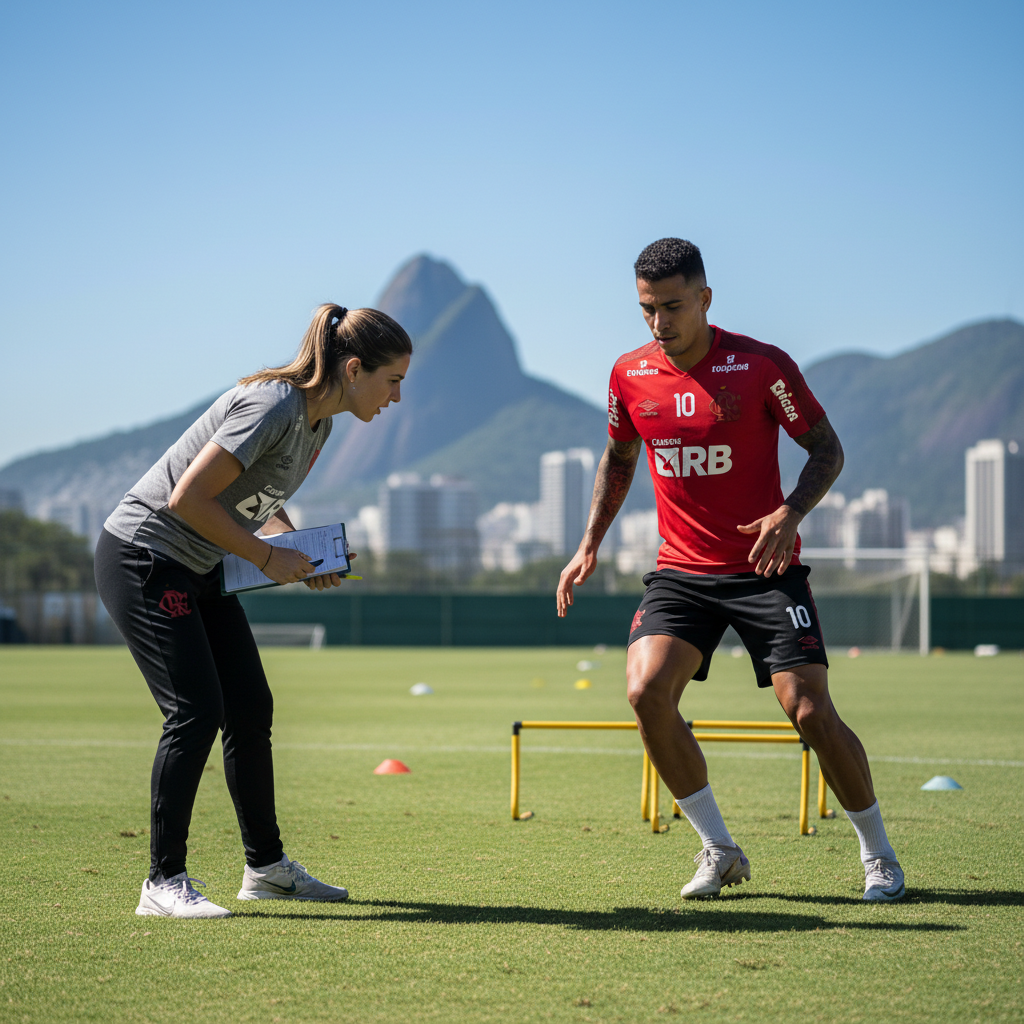
Putting all of this together into a practical program is where the difference actually gets made. For the body weight knee injury amateur soccer player in Rio de Janeiro who is returning to a Sunday pelada after months away, or who has been playing recreationally and wants to stop accumulating silent damage, the entry point is not the field. It is two physiotherapy-guided sessions per week focused entirely on movement quality and the strength foundations covered above.
Those sessions serve a specific purpose: establishing baseline capacity before match intensity is added. In practical terms, that means single-leg stability, posterior chain strength, and hip abductor control are functioning adequately before the player faces the lateral cuts, sprint decelerations, and contact situations that define a real match. Progressing to sport-specific drills, short sprints and directional changes, only after those targets are met is not excessive caution. It is the difference between preparation and exposure.
Before each match, a simplified FIFA 11+ warm-up adapted for the amateur setting takes roughly 15 minutes and has demonstrated 30 to 50% reductions in knee injuries in exactly this population. Most players in a weekend pelada in Rio skip this entirely.
If you are ready to build that foundation properly, contact our team at F10 Fisio or explore our physiotherapy conditioning programs for soccer players.
Understanding how body weight impacts your joint health is a significant step toward preventing long-term damage on the pitch. By managing these forces, you can improve your agility and keep your knees healthy for seasons to come. If you want expert help building a personalized injury prevention strategy, you might find our Services beneficial. Our team can guide you through specific exercises and lifestyle adjustments that align with your athletic goals; ensuring you stay active and pain-free while playing the game you love.